How to Make Homemade Basil Oil (Your Secret Weapon for Instant Flavor)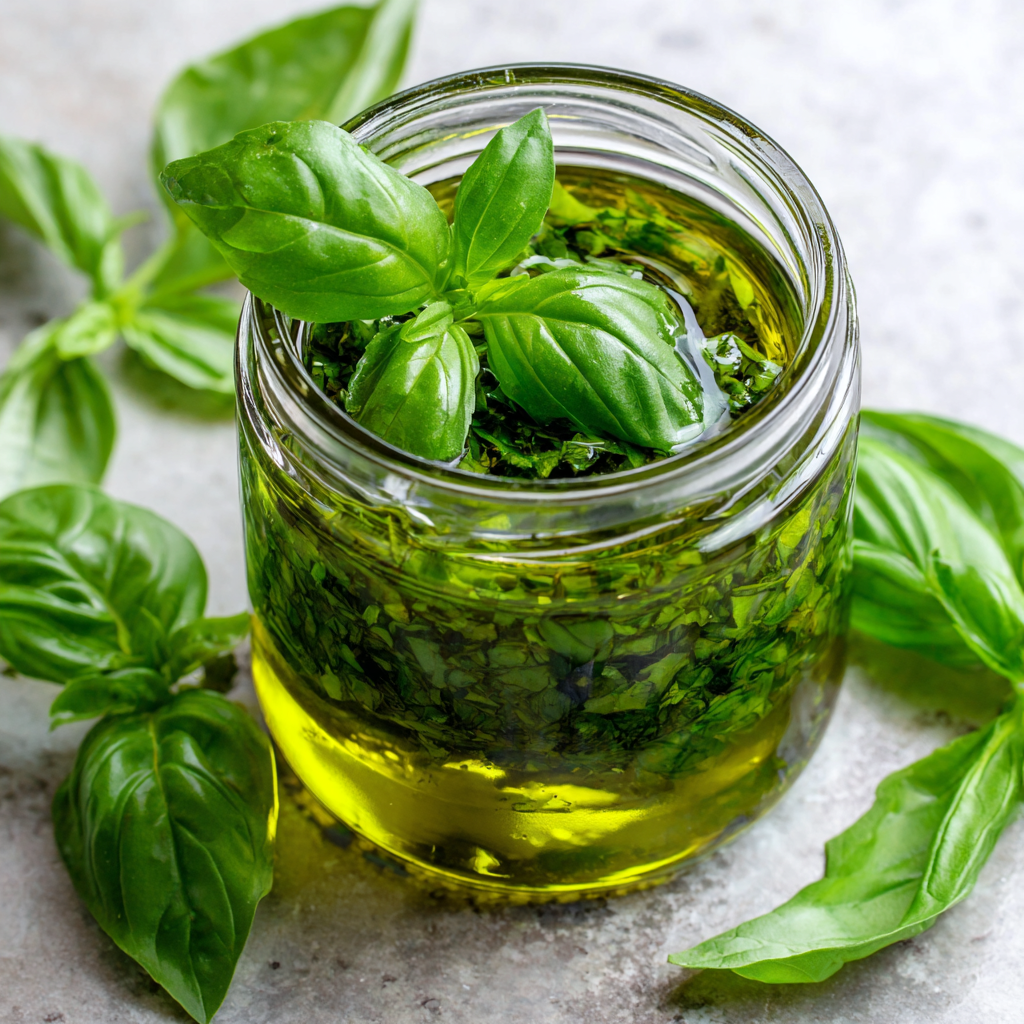
Hey there, friend! Let’s talk about a little kitchen magic that’s been my not-so-secret weapon for years: a bottle of brilliantly green, intensely fragrant homemade basil oil. You know that moment when you’re plating a simple dish—a humble bowl of creamy soup, a plate of pasta, or even just some crusty bread and cheese—and you want to give it that final “wow” factor? That’s the power this oil holds.
Forget the dull, sometimes bitter herb oils you might find languishing on a grocery store shelf. What we’re making today is something else entirely. It’s vibrant, fresh, and tastes like a sun-warmed basil garden captured in liquid form. It’s the kind of condiment that makes you feel like a gourmet chef, even on a Tuesday night. The best part? It comes together with just a handful of ingredients and about 15 minutes of your time.
I’m a firm believer that the most impactful recipes are often the simplest. This basil oil is a perfect example. It’s not about complex techniques or hard-to-find ingredients; it’s about honoring one beautiful, seasonal herb and transforming it into something you can drizzle, dip, and dazzle with all week long. So, if you’re ready to add a pop of color and a serious punch of flavor to your cooking repertoire, grab your blender and your biggest bunch of basil. We’re about to make your kitchen (and your next meal) a whole lot brighter.
The Basil Plant That Started It All
PrintHomemade Basil Oil (Bright Green & Flavor-Packed)
Fresh, vibrant, and beautifully aromatic, homemade basil oil instantly elevates everything from pasta and pizza to soups and salads. With its bright green color and clean herbal flavor, this simple recipe takes just minutes to prepare and adds a gourmet touch to any dish.
- Prep Time: 10 minutes
- Cook Time: 2 minutes (blanching)
- Total Time: 12 minutes
- Yield: About 1 cup 1x
Ingredients
2 cups fresh basil leaves (packed)
3/4–1 cup extra virgin olive oil
Pinch salt
Instructions
Blanch basil (for bright color): Bring a small pot of water to a boil. Add basil leaves for 10–15 seconds, then immediately transfer to an ice bath. Drain and squeeze dry thoroughly.
Blend: Add basil, olive oil, and salt to a blender or food processor. Blend until completely smooth and vibrant green.
Strain (optional): For ultra-smooth oil, strain through a fine mesh sieve or cheesecloth.
Store: Transfer to a clean jar or bottle and refrigerate.
Nutrition
- Calories: 110–120 kca
- Fat: 14g
- Carbohydrates: 0g
- Protein: 0g
My love affair with basil oil began, of all places, on a fire escape in my first tiny apartment. I was determined to have a “garden,” which consisted of a few terracotta pots wedged between the iron rails. One held a particularly enthusiastic basil plant that, against all odds, thrived. By mid-summer, it was a glorious, leafy beast demanding to be used.
Faced with more basil than I could possibly turn into pesto, I remembered a tip from a chef friend about blanching herbs to lock in color. One experimental afternoon, with the city buzzing below, I blanched, blended, and strained my way to my very first bottle of emerald-green oil. Drizzling it over a simple caprese salad made with grocery store tomatoes felt like a revolutionary act. It transformed my humble meal into something special, a tiny celebration on a plate. That’s the magic I want to share with you today—the ability to turn abundance (even from a single potted plant) into a versatile, flavor-packed treasure.
What You’ll Need to Make This Vibrant Basil Oil
Here’s your simple shopping list. The quality of your ingredients directly translates to the flavor of your finished oil, so this is where we get to be a little choosy!
- 2 cups packed fresh basil leaves: This is non-negotiable—fresh is everything! Look for bright green, perky leaves without dark spots. The “packed” part is important; gently press the leaves into your measuring cup to get a generous amount. This is the star, so let it shine.
- 3/4 to 1 cup extra virgin olive oil: Use a good-quality oil you enjoy the taste of on its own. A mild, fruity EVOO works beautifully. The amount can vary slightly depending on your basil and blender. We’ll start with 3/4 cup and add a touch more if needed to get a pourable consistency.
- A generous pinch of fine sea salt: Just a pinch! This isn’t meant to season your entire dish, but to subtly heighten and round out the basil’s natural flavor. It makes the herbal notes sing.
- Ice (for the ice bath): You’ll need a handful of ice cubes and some cold water in a bowl. This is our color-locking secret weapon, stopping the cooking process instantly to preserve that gorgeous green.
Chef’s Insight: Don’t be tempted to skip the salt or use dried basil. The salt is a flavor catalyst, and dried herbs simply won’t blend into the smooth, vibrant infusion we’re after.
Let’s Make It: Your Step-by-Step Guide to Perfect Basil Oil
Ready? Let’s walk through this together. I’ll be with you at every step, sharing my favorite tips to ensure success.
- Prep Your Stations. Before you touch the stove, set yourself up for success. Fill a medium bowl with cold water and ice—this is your “ice bath.” Have a slotted spoon, spider strainer, or even just a fork nearby. Also, line a clean kitchen towel or a few layers of paper towels on your counter. Being prepared makes the fast-paced blanching step a breeze, not a scramble.
- Blanch for Brilliant Color. Bring a small pot of water to a rolling boil. While it heats, gently rinse your basil leaves. Once boiling, grab your basil by the stems (if attached) and submerge all the leaves in the boiling water. Count slowly to 10-15 seconds—that’s all it takes! Why we do this: Blanching deactivates the enzymes that cause herbs to turn brown, locking in that incredible, vibrant green color permanently.
- Shock and Dry. Immediately use your slotted spoon to scoop the basil out of the boiling water and plunge it directly into the ice bath. Swish it around for 30 seconds until completely cold. This “shocks” the leaves, stopping the cooking process dead in its tracks. Now, the most crucial step for a non-watery oil: gather the basil and squeeze it extremely dry in your hands or within the towel. Get out as much moisture as you possibly can. A little elbow grease here prevents a splattery blend and extends your oil’s shelf life.
- Blend to Smooth Perfection. Place your very dry, blanched basil in a blender or small food processor. Add 3/4 cup of olive oil and that pinch of salt. Secure the lid and blend on high for a full minute or more, until the mixture is completely smooth, creamy, and a vibrant shade of green. If it seems too thick to pour, add the remaining 1/4 cup of oil a tablespoon at a time until it flows nicely.
- Strain (For Ultra-Smooth Oil). This step is optional but recommended for a professional, silky finish. Place a fine-mesh sieve over a bowl or measuring cup. Pour the blended oil through the sieve, using a spatula to gently press down on the pulp and extract every last drop of green goodness. For crystal-clear oil, you can line the sieve with cheesecloth or a nut milk bag.
- Store and Shine. Funnel your beautiful emerald oil into a clean glass jar or bottle. Label it with the date (trust me, you’ll forget!). Store it in the refrigerator, where it will keep its bright color and fresh flavor for 5-7 days.
How to Use Your Homemade Basil Oil (Get Creative!)
The fun begins! Think of this oil as your culinary paintbrush. Drizzle it over tomato soup or minestrone just before serving. Anoint a Margherita pizza right out of the oven. Swirl it into hummus or ricotta for a stunning dip. It’s heavenly on grilled chicken or fish, tossed with roasted vegetables, or simply as a dip for crusty, warm bread. Use it anywhere you want a fresh, aromatic burst of basil that’s more elegant than just sprinkling chopped leaves.
5 Delicious Twists on Your New Favorite Oil
Once you’ve mastered the classic, the playground is open! Try these easy variations:
- Lemon-Basil: Add the zest of one lemon to the blender for a sunny, bright lift.
- Spicy Garlic Basil: Blanch 1 peeled garlic clove with the basil for a gentle, sweet garlicky heat.
- Herb Garden Blend: Swap out 1/2 cup of the basil for fresh parsley, chives, or tarragon.
- Vegan “Parmesan” Drizzle: Blend in 2 tablespoons of nutritional yeast for a cheesy, umami-rich flavor.
- Dairy-Free Creamy Drizzle: For a thicker, creamy version perfect for pastas, blend in 1/4 cup of raw cashews (soaked for 2 hours, then drained) with the basil and oil.
A Few Final Thoughts From My Kitchen to Yours
This recipe has been my constant companion for years, evolving from that first fire-escape experiment to a more refined, reliable method. I’ve learned that the squeeze-dry step is the true guardian of both color and longevity. I’ve also learned to always make a double batch when basil is at its peak in the summer—it disappears fast!
One funny kitchen story: I once, in a hurry, tried to skip the ice bath and just run the blanched basil under cold tap water. The result was a sadly dull, army-green oil. Lesson learned! The ice bath isn’t just a suggestion; it’s the key to that jewel-like color we all love. So take that extra 30 seconds. Your future self, admiring the gorgeous bottle in your fridge, will thank you.
Your Questions, Answered
Let’s tackle some common questions before you get started.
- Why did my oil turn brown/dark green? This usually means the basil wasn’t shocked quickly or thoroughly enough in the ice bath, or it was blended for too long, generating heat. Ensure your ice bath is truly icy, and blend just until smooth. Proper blanching and shocking are your best defenses against browning.
- Can I skip the blanching step? You can, but I don’t recommend it for this bright green version. Un-blanched basil oil will oxidize and turn a dark, murky green/brown very quickly (sometimes within hours) and has a much shorter shelf life. Blanching preserves the vibrant color and fresh flavor.
- How long does it really last? Stored in a very clean, airtight container in the refrigerator, it’s best used within 5-7 days. Always give it a sniff test before using. Because it’s fresh and preservative-free, it won’t last for months like store-bought infused oils.
- Can I use other oils? Absolutely! Extra virgin olive oil is classic, but you can experiment with a portion of mild avocado oil or grapeseed oil. Avoid strongly flavored oils like unrefined coconut or toasted sesame, as they’ll overpower the delicate basil.
Quick Nutritional Overview
Please note: This is an estimate for informational purposes.
- Yield: About 1 cup
- Prep Time: 10 minutes
- Cook Time: 2 minutes (blanching)
- Total Time: ~12 minutes
- Serving Size: 1 Tablespoon | Estimated Nutrition: 110-120 calories | 14g Fat (mostly healthy monounsaturated) | 0g Carbohydrates | 0g Protein
Final Thoughts
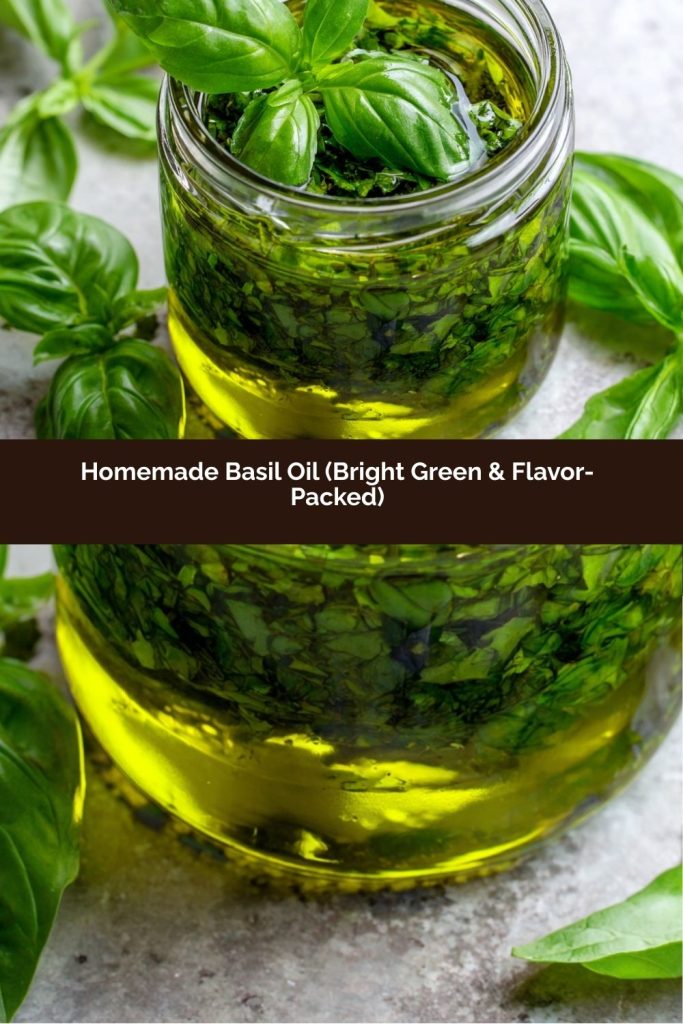
Homemade basil oil is one of those deceptively simple kitchen tricks that instantly elevates almost anything. With just a handful of ingredients and a few mindful steps, you turn fresh basil into a vibrant, aromatic oil that feels luxurious on soups, pastas, pizzas, roasted veggies, and even crusty bread.
The key takeaways? Blanch for color, squeeze dry for longevity, and store in a clean container to preserve that jewel-like green. Once you try it, you’ll see how a small drizzle can transform a humble meal into something memorable, turning everyday cooking into a little celebration.
It’s fresh. It’s bright. It’s versatile. And honestly, once you make it, you’ll start finding excuses to use it everywhere. From my kitchen to yours, may your basil a